
Gum Disease Treatment – Lincoln, NE
Renew Oral Health After Gum Disease Damage
Do you notice blood in your spit after brushing and flossing? Does your gum tissue seem overly red in color, tender to the touch, or swollen? These signs shouldn’t be ignored, as they may indicate the presence of a serious infection known as periodontal (gum) disease. Left untreated, this condition can eventually threaten the continued livelihood of a healthy jawbone and teeth, which is why Dr. Olberding strongly recommends reaching out to our Lincoln dental team sooner rather than later.
Why Choose Olberding Dental for Gum Disease Treatment?
- Top-Rated Dental Team in the Area
- Affordable Payment Options Available
- Early Morning and Afternoon Hours
What is Gum Disease?

Gingivitis, or gum disease, affects a large percentage of the population, but it's virtually painless in its early stages. As a result, many are unaware that they're struggling with it. The good news is that regular visits with Dr. Louis Olberding can reduce your susceptibility. This is crucial because the advanced stages can take a toll on your mouth as well as your entire body. In fact, periodontitis contributes to such conditions as tooth loss, heart disease, and stroke.
Symptoms of Gum Disease

Gum disease starts with the buildup of plaque, a filmy substance consisting of bacteria, food particles, and saliva. In as little as 24 hours, plaque can harden into calculus, which brushing and flossing alone can no longer remove. These deposits produce toxins, which attack the gum tissue and start damaging the bone below the gum line. At this point, it’s normal for patients to experience:
- Red and/or puffy gums
- Persistent bad breath
- Tenderness or discomfort
- Loose teeth
- Bleeding and/or receding gums
How Do We Treat Gum Disease?

Dr. Olberding is skilled at finding and addressing complex biological problems related to each patient’s oral health, thanks to his keen eye and years of experience. During your appointment, he will discuss your treatment options and offer advice to prevent recurrence. He will also answer any questions you have pertaining to gum disease treatment in Lincoln so you feel completely confident moving forward.
Scaling & Root Planing
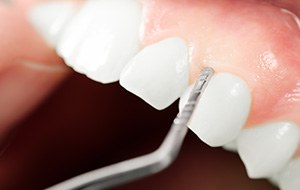
Gum disease is a sinister threat that can start out almost imperceptibly small, and it may seem like a negligible issue until it develops into its painful and destructive later stage called periodontitis. To prevent the many oral and overall health problems this nasty infection can lead to, it may be necessary for the team at Olberding Dental to address it with a specialized gum disease treatment like scaling and root planing. Here’s a quick look at how the scaling and root planing process works, but please contact our team in Lincoln if you’d like to learn more.
Do You Need Scaling & Root Planing?

Gingivitis, the first stage of gum disease, is mild inflammation of the gum tissue that can usually be reversed with improved oral hygiene habits. However, untreated gingivitis will eventually develop into periodontitis, a painful infection that can show itself through symptoms like:
- Bleeding during oral hygiene sessions
- Pain or discomfort when chewing
- Loose teeth
- Persistent bad breath (halitosis)
- Swollen or puffy bums
- Visible accumulations of plaque
In cases of advanced gum infection, it may be necessary to address the problem with scaling and root planing, which is a process designed to eliminate infectious material and help the dental and gum tissues heal and grow back together.
The Process of Scaling & Root Planing

This deep-cleaning technique is often the best starting point for eradicating infectious bacteria from the gum tissue. There are two distinct sections to the treatment, and they will typically be scheduled during two different appointments. First, we will thoroughly eliminate plaque and tartar from beneath the gum tissue with high-tech instruments. Then, the tooth root surfaces (which are notorious for developing accumulations of bacteria over time) are carefully smoothed as well to prevent future flare-ups and help the teeth reintegrate with the gum tissue.
For an even more comfortable and relaxing experience, we offer a selection of sedation techniques, including injection-free anesthetics.
Aftercare Tips for Scaling & Root Planing

Scaling and root planing can be a rather intensive process, so it may take up to several weeks for your teeth and gums to fully recover. During this healing period, you may experience issues like discomfort and sensitivity, but you can keep your recovery smooth, comfortable, and complication-free by adhering to our detailed aftercare instructions. These will probably include items like:
- Rinsing your mouth with warm saltwater to loosen food debris, soothe irritation, and kill harmful bacteria.
- Being gentle when brushing and flossing after the treatment. Be sure to clean your teeth with a soft-bristled brush using short, circular strokes.
- Avoiding foods and beverages that are hot, spicy, sugary, acidic, crunchy, or chewy while you are recovering.
- Sticking to a soft diet for at least 48 hours after treatment.
- Refraining from intense physical exercise for a few days after the procedure.